
logo
Warme producten Topproducten
Meer producten
Over. Wij.
China HEFEI HUMANTEK. CO., LTD.
Over. Wij.
HEFEI HUMANTEK. CO., LTD.
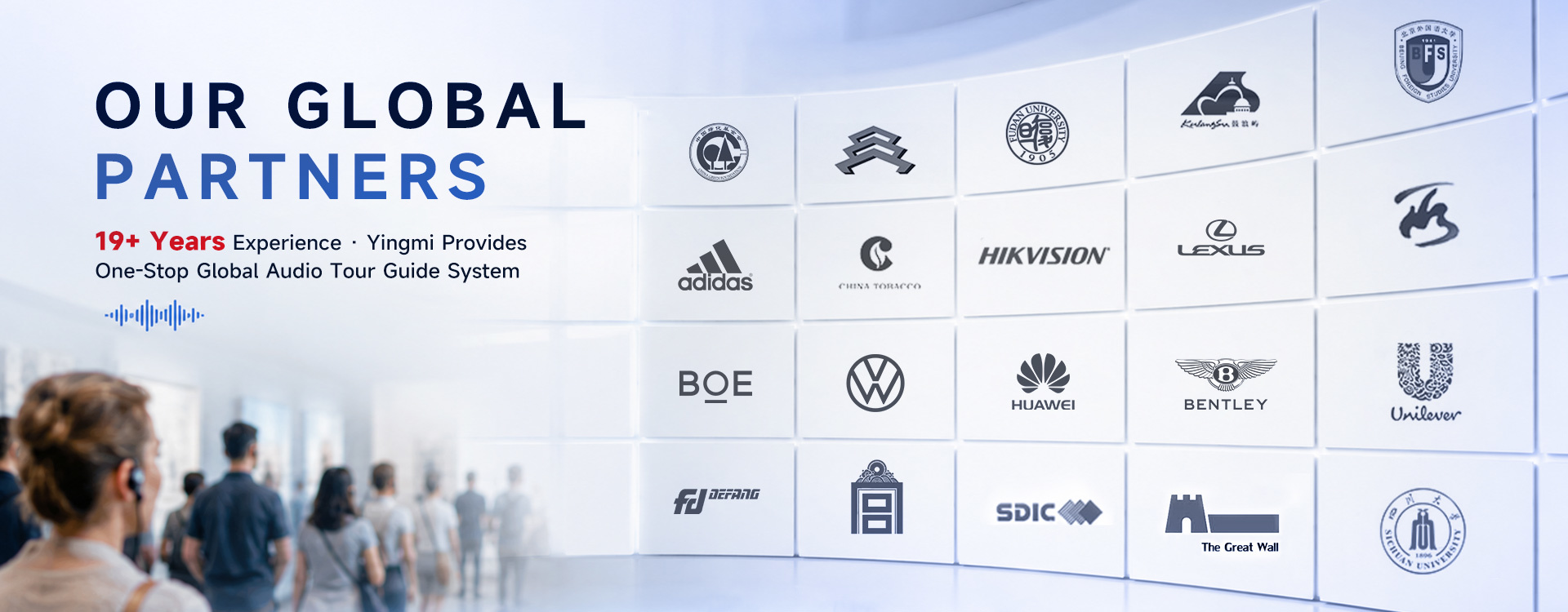
HEFEI HUMANTEK CO., LTD., onderdeel van YingTe Group, is een toonaangevende Chinese fabrikant van intelligente audiogidsystemen. Opgericht in 2007 en gevestigd in een faciliteit van meer dan 30.000 m² in de Hefei High-tech Zone, zijn we gespecialiseerd in de ontwikkeling, productie en OEM-aanpassing van audiogidsystemen. We bieden volledige technische ondersteuning en hebben op maat gemaakte oplossingen geleverd voor wereldwijde klanten zoals A-d-i-das, H-u-a-wei, M-e-r-c-e-d-e-s-B enz, L-e-x-us...
Lees meer
Verzoek A Citaten
0
Jaar
Klanten
0%
P.C.
0+
werknemers
Wij leveren
De beste service!
U kunt op verschillende manieren contact met ons opnemen.
Neem contact met ons op
HEFEI HUMANTEK. CO., LTD.

kwaliteit Audio-systeem voor gids & Draadloos toergidsysteem Fabriek

Evenementen
Het laatste bedrijf nieuws over Unveiling the Anti-interference Secrets of Wireless Tour Guide Systems: Solving Interference Challenges in Multiple Scenarios
Unveiling the Anti-interference Secrets of Wireless Tour Guide Systems: Solving Interference Challenges in Multiple Scenarios

2026-01-22

To determine whether a wireless narrator device can resist interference, don't just rely on the exaggerated parameters. It's crucial to see how it performs in real scenarios and whether it can adapt to different interference environments in various countries and situations. Yingmi has been deeply involved in this field for 18 years since its establishment in 2007. It always regards anti-interference technology as its core and has served over 10,000 customers. Whether it's industrial plants, scenic spots, or exhibition halls, there are actual implementation cases. The anti-interference strength is measured and verified in reality.   Three core pain points of wireless narrator device anti-interference in various scenarios   Many customers have joked with me that they once bought some cheap narrator devices, which seemed to have all the functions, but they failed when used in practice. In short, the anti-interference ability was too poor.   Pain point 1: Metal interference in industrial plants, frequent signal disconnections and distortion   Many customers purchase narrator devices to receive visitors in factories. Especially in industries like mechanical processing, steel, and electronics, the factories are filled with metal equipment, metal doors and windows, and pipes. As we all know, metals have a particularly strong effect on blocking and reflecting wireless signals, directly causing signal disconnections and poor sound quality. An European customer told me that a narrator device they used before lost sound when moving just a few steps in the factory. The narrator shouted loudly, but the visitors still couldn't hear clearly. This not only wasted time but also made them seem unprofessional.   Pain point 2: Multiple teams visiting simultaneously, severe channel crosstalk   Whether it's large exhibition halls, scenic spots, or industrial plants, during peak seasons, several teams often visit simultaneously. This requires the narrator device to be able to work independently on multiple channels. However, many ordinary narrator devices have too small channel intervals and weak anti-interference capabilities, making it easy for different teams' signals to interfere with each other, resulting in a lot of crosstalk and noise - Team A hears the explanation of the production line, and suddenly Team B's chatting sound emerges. The same happens in the opposite direction. This not only affects the visiting experience but also makes it seem unprofessional if the explanation is about the core information of the enterprise.   Pain point 3: Electromagnetic interference in outdoor scenic spots, unstable signals   Scenic spots and outdoor exhibition halls are also common scenarios for narrator devices. However, the electromagnetic signals in these places are extremely chaotic - mobile phone signals, radio signals, and scenic spot broadcasts all mix together, causing particularly strong interference to the wireless narrator device. Many narrator devices fail in such environments, with noisy sound quality and unstable signals. Especially in remote scenic spots, the interference is even more severe, and they may even lose connection, ruining a good visit with the equipment.   18 years of technology deepening by Yingmi: The core strength of anti-interference capability   The anti-interference capability of a wireless narrator device is not achieved by a single technology claim. It must be controlled at every step from research and development, production to testing. Yingmi has been in this field for 18 years. It is a national-level high-tech enterprise and a big data enterprise. It has several core patent technologies and 4 automated SMT production lines. From research and development, production to sales and after-sales, it can control the entire chain itself. The anti-interference technology has undergone more than 10 generations of iterations and has obtained many utility model patents. The core advantages are concentrated in three points, which are very practical.   Core technology 1: 4GFSK signal modulation + CRC digital encryption, dual anti-interference   The 4GFSK signal modulation technology independently developed by Yingmi is the key to cracking electromagnetic interference. Unlike the analog signals of ordinary narrator devices, this digital signal has much stronger anti-interference capabilities. It can effectively resist the interference from external signals such as mobile phones, radios, and broadcasts. Even in densely electromagnetic signal areas like urban exhibition halls and outdoor scenic spots, the signal can remain stable without fluctuations. In addition, it is equipped with CRC digital encryption technology, which can encrypt the teaching channel and not only prevent cross-channel interference but also protect the privacy of the teaching content, such as enterprise core area visits and high-end exhibitions. It can be used with great confidence.   Core Technology 2: Digital secondary frequency conversion anti-interference, reducing channel intervals without cross-interference   To address the problem of cross-interference when multiple teams visit simultaneously, Yingmi uses digital secondary frequency conversion anti-interference technology. It reduces the channel interval to an ultra-small bandwidth of 200k. This way, it can support more independent channels and avoid interference between different channels. I have tested it many times, and the Yingmi teaching device can support up to 200 independent channels. Even if several groups of teams visit simultaneously, each group can listen to their own teaching without cross-interference. The problem of multi-team reception is solved at once.   Core Technology 3: SOC embedded integrated noise reduction, balancing anti-interference and sound quality   Many teaching devices sacrifice sound quality to enhance anti-interference capabilities. The sound is particularly indistinct. However, Yingmi did not do this. It achieved a balance between anti-interference and sound quality. Its SOC embedded integrated digital noise reduction technology can not only resist various external interferences but also precisely filter out environmental noise - such as mechanical noise in factories and crowd noise in scenic areas. Only the clear voice of the instructor remains. This technology has been used and verified by thousands of customers. Even in a noisy factory with 90 decibels, wearing the receiver, you can clearly hear every word without having to repeatedly ask.   Scenario-based recommendation: Yingmi's 2 anti-interference models are suitable for all scenarios   Based on the interference characteristics of different scenarios, Yingmi has two core models that are particularly popular and cover most scenarios, such as industrial plants, outdoor scenic areas, and exhibition halls. The anti-interference capabilities of these models have been verified by customers in multiple regions around the world. Customers who choose these two models are unlikely to encounter problems. R8 Wireless Teaching Device: Multi-scenario universal, anti-interference + hygiene dual advantages   The R8 wireless teaching device is a universal model specifically developed by Yingmi for multi-scenarios. Its main selling points are strong anti-interference and comfortable hygiene. It is particularly suitable for exhibition halls, enterprise receptions, and small scenic areas. This model is equipped with 4GFSK signal modulation technology and CRC digital encryption technology. Its dual protection can resist various external interferences. Even in a densely electromagnetic signal urban exhibition hall, the signal can be stable without cross-interference or disconnection. It is very convenient to use.   For multi-team receptions, the R8 can support 32 independent channels. For small and medium-sized teams visiting simultaneously, it is fully sufficient. Moreover, its channel intervals are small and the anti-interference is strong, so the teaching content of different teams will not interfere with each other. In addition, it adopts the Ergo ergonomic non-in-the-ear design. The audience wearing it for a whole day will not feel pain. It also solves the customers' special concern about hygiene. Whether it is for high-end receptions or cross-border exhibitions, it is suitable to use.   008A Wireless Teaching Device: Industrial-grade anti-interference, solving complex scenario problems   If the customer's usage scenario is particularly complex, such as industrial plants or large outdoor scenic areas, with strong interference, then the 008A wireless teaching device is the right choice. This model is a industrial-grade teaching device specifically developed by Yingmi for industrial scenarios. Its anti-interference capability is fully enhanced.   008A adopts advanced wireless amplification technology and digital secondary frequency conversion anti-interference technology. It not only can resist electromagnetic interference but also effectively penetrate metal obstacles. The problem of metal interference in industrial plants has been solved at once. I have tested it in a steel plant before. It is filled with metal equipment. The signal transmission distance of the 008A can reach 280 meters. Even passing through multiple metal doors, the signal will not be disconnected, and the sound quality remains clear, without any impact.   In terms of multi-team reception, 008A can support up to 200 independent channels. It can also handle the intensive reception of multiple teams in large factories and scenic areas without any problem. There is no interference between different channels, and the reception efficiency can be significantly improved. At the same time, it is equipped with SOC embedded integrated digital noise reduction technology. The mechanical noise in factories and the crowd noise in scenic areas can be accurately filtered out. Even in a noisy environment, the audience can clearly hear the explanations.   FAQ   Q1: How does the Yingmi speaker handle interference from industrial buildings? Can it withstand the metal interference from industrial plants? A1: Absolutely no problem! The Yingmi008A is specifically designed for industrial buildings. It uses wireless amplification technology and digital secondary frequency anti-interference technology, which can effectively penetrate metal obstacles and block the obstruction and reflection of signals caused by metal materials.   Q2: If multiple teams visit simultaneously, how many independent channels can it support? Will there be crosstalk? A2: The number of independent channels supported by Yingmi different models varies. The 008A can support up to 200 independent channels, while the R8 can support 32. You can choose based on your reception scale. Moreover, all models adopt digital secondary frequency anti-interference technology and CRC digital encryption technology. The channel bandwidth is only 200k, which is very small. Different channels will not interfere or crosstalk with each other. Even if multiple teams visit simultaneously, their explanations can be independently transmitted without affecting each other.   Q3: Will the anti-interference ability of the equipment decrease over time? How should it be maintained? A3: As long as it is used normally, the anti-interference ability will not decrease over time. The Yingmi speaker uses high-quality chips and components. Before leaving the factory, it undergoes 5 strict quality inspections. It has a long service life and supports lifetime maintenance. Daily maintenance is also simple. Just clean the equipment regularly, check the charging interface and headphones, and make sure the equipment is not waterlogged or dropped. Additionally, Yingmi also offers 7×24-hour multilingual technical support. If you encounter any anti-interference-related problems, you can contact the technicians at any time to solve them and enjoy free upgrades to ensure the equipment maintains good anti-interference performance for a long time.
Bekijk meer
Het laatste bedrijf nieuws over Wireless narrator audio quality analysis: Solving the Pain Points of Listening in Scenarios
Wireless narrator audio quality analysis: Solving the Pain Points of Listening in Scenarios

2026-01-22

Whether for purchasing in scenic spots, museums, or for corporate receptions and exhibitions, the question that everyone asks most frequently is "What is the sound quality of the wireless interpreter?" Many customers have actually fallen into traps - they are all impressed by the exaggerated claims of parameters, but when they actually use it, they find that either the noise is so loud that it's impossible to hear clearly, or it stops working when moved a little further away, the sound changes in quality, and the most frustrating thing is that when multiple teams use it together, there is mutual interference. Especially in complex scenarios such as overseas outdoor scenic spots and large exhibition halls, if the sound quality is poor, the reception level will directly drop, and even the brand reputation may be damaged.   Ⅰ.Must-read for overseas customers: Judging the sound quality of a wireless interpreter, look at these 3 points   When many overseas customers purchase, they always focus on the parameters and think that the higher the parameters, the better the sound quality. This is actually the most common place to fall into a trap. Whether the sound quality of a wireless interpreter is good or not ultimately depends on the actual effect when used. Especially in overseas scenic spots, museums, and corporate receptions, the requirements for sound quality are more specific. In summary, look at the following 3 core points, which are also the direction that Yingmi has been focusing on in product refinement over the past 18 years.   1. Clarity: No noise, no off-tune, being able to clearly hear the original sound is the foundation   Whether the sound quality is good or not, the first thing to look at is clarity. This is also the most basic requirement for a wireless interpreter. Whether it's a tour guide explaining the scenic spots, introducing exhibits, or a corporate reception presentation, the audience needs to hear every detail clearly - there should be no harsh current noise, no echoes, and no voice pitch changes or distortion. For example, the tone fluctuations and speed changes of the speaker need to be fully restored so that accurate information can be conveyed, and the audience's experience will be better.   Here, overseas customers must be reminded that many cheap devices, in order to reduce costs, directly omit the core noise reduction processing. In a quiet room, it may still be able to listen; but once taken outdoors, with wind, and noisy crowds, the noise will instantly cover the interpreter's voice, making it impossible to hear clearly. Some devices, with parameters marked as "high-definition sound quality", when actually played, the sound is either dull and unclear or sharp and irritating, which are all manifestations of sound quality distortion. Truly high-quality wireless interpreters will do professional noise reduction and audio processing, filtering out external noise and restoring the original sound of the interpreter, even if it's a soft explanation, it can be heard clearly. 2.Anti-interference: No interference in complex scenarios, continuous sound, stable is reliable   When overseas customers purchase wireless interpreters, they are mostly used in scenic spots, large exhibition halls, and exhibitions. These scenarios have two common pain points: one is the chaotic environment, with various interference sources such as mobile phone signals and radio signals mixed together; the other is the large usage volume, with multiple teams explaining simultaneously. This puts high requirements on the anti-interference ability of the interpreter - it should avoid interference between different teams and not be interfered by external signals, avoiding situations of interruption or lag.   3.Adaptability: Fit multiple overseas scenarios, clear multi-language playback   The overseas usage scenarios are particularly diverse, which requires the sound quality of the wireless interpreter to have excellent adaptability. For example, overseas scenic spots are mostly outdoors, with strong winds and noisy crowds, the equipment must have good windproof and noise reduction capabilities to cope with these disturbances; museums and exhibition halls are indoor spaces, with closed spaces, the equipment must control the volume well to avoid echoes, and at the same time, it must be compatible with multi-language explanations - overseas tourists come from all over the world, regardless of the language, the sound quality must not be distorted, it must be clear and smooth.   In addition, overseas customers mostly also pay attention to the battery life and convenience of the equipment, but these cannot be achieved at the expense of sound quality. Some devices, in order to extend battery life, deliberately reduce the audio output power, resulting in poor sound quality; There are still some devices that are too small and directly omit the audio optimization module, resulting in an unpleasant sound quality. Truly reliable wireless tour guides will find a balance among battery life, size, and sound quality, being both user-friendly and portable, with no compromise on sound quality.   II. Yingmi's Best-Selling Recommendations: Two Wireless Tour Guides with Outstanding Sound Quality Suitable for Overseas Scenarios   Yingmi has been in the tour guide industry for 18 years and has 4 automated SMT production lines. From R&D to sales and after-sales service, it provides a one-stop solution. It has served over 4,000 customers, including many 5A-level scenic spots, museums, and enterprises overseas, such as the Xiangkun Temple Scenic Area in Vientiane, several historical museums in Europe. Based on the most commonly used team-led and self-guided scenarios by overseas customers, we recommend two products with outstanding sound quality and strong adaptability, both having passed EU CE and RoHS certifications. They can be directly adapted to overseas voltages, without the need for additional hassle. 1. R8 Headband Wireless Tour Guide: The top choice for multiple teams, with strong anti-interference and excellent sound quality   The R8 headband wireless tour guide is Yingmi's flagship product specifically developed for overseas large-scale team reception scenarios. It focuses on "strong anti-interference, clear sound quality, and comfortable wearing", making it particularly suitable for scenarios with multiple teams working simultaneously, such as overseas scenic spots, large exhibition halls, and enterprise inspections. It is currently the most purchased product by overseas customers.   In terms of sound quality, the R8 uses Yingmi's own patented SOC embedded integrated digital noise reduction technology, which is also one of Yingmi's core technologies. It can effectively filter out external current noise and environmental noise. Even in crowded scenic spots outdoors, no matter how loud the noise is, the original voice of the tour guide can be restored, with full clarity. At the same time, it adopts 4GFSK signal modulation technology, combined with CRC digital encryption processing, not only can it block external signal interference from mobile phones and radio stations, but also supports 200 adjustable channels. When multiple teams use it simultaneously, simply switching different channels will not cause interference or interruption, and the stability is particularly reliable.   The adaptability is also very good. The R8 adopts Ergo ergonomic non-in-the-ear design, making it very comfortable to wear. Even if worn for a whole day, it won't cause ear pain, and it also solves the hygiene problem of in-the-ear devices, making it very suitable for overseas tourists and inspection teams. Its carrier frequency is very stable, and the audio lossless transmission distance can reach 500 meters. Even in large scenic spots and exhibition halls, the sound quality can remain clear, without distortion or interruption. Additionally, the charging box of the R8 supports global universal voltage (110V-220V), and overseas customers can use it directly by plugging in the local power supply, which is very convenient.   2.M7C Two-in-One Tour Guide: Suitable for both self-guided and team-led, with no compromise on multi-language sound quality   If overseas customers have both team-led and self-guided needs - for example, in scenic spots, some tourists want to follow a tour guide to listen, while others want to listen on their own; or in exhibition halls, tourists can self-visit and occasionally have team inspections - then this M7C automatic sensing + team-led two-in-one tour guide is the optimal choice. It not only balances the stability of team-led tours but also has the convenience of self-guided tours, and its sound quality performance is also outstanding, making it particularly suitable for scenarios in overseas museums and cultural scenic spots.   In terms of sound quality, M7C adopts the RFID-2.4G star distribution system design, with extremely strong anti-interference capability, which can effectively solve the signal interference problem between adjacent guiding points, ensuring clear sound quality without noise during self-guided tours. It supports MP3 format audio playback, with a sampling rate of up to 44.1k and 128kbps. It can fully restore every detail of the audio content, whether it's multilingual explanations or those with emotional tones, without any distortion or pitch changes. It can meet the listening needs of tourists from different countries overseas. Moreover, its team explanation mode uses the same digital noise reduction technology as R8, with clear sound quality. It also supports multi-channel adjustment and won't interfere with each other when multiple teams use it simultaneously.   In terms of adaptability, the most convenient feature of M7C is that it can switch between automatic sensing and team explanation modes, which is very flexible. In the self-service explanation mode, tourists can walk to the explanation point with the device, without manual operation. The device will automatically sense and play the corresponding explanation content. The sound quality is clear, and the coverage is also uniform. In the team explanation mode, the explainer uses a transmitter to explain, and the audience wears a receiver to hear clearly. It is suitable for parallel use by multiple teams. Additionally, M7C can store 9999 segments of explanations and supports multilingual explanations. Whether it's a mainstream language or a minority language, the sound quality will not be compromised when playing. The pronunciation is clear and smooth.   FAQ   Q1: Can the Yingmi wireless guide device maintain clear sound quality in outdoor environments with strong winds and noisy conditions abroad? A1: Absolutely. Whether it's the R8 or the M7C, both use Yingmi's own patented SOC embedded integrated digital noise reduction technology, along with a wind-proof microphone design, which can effectively filter out strong wind noises, crowd noises, and other external disturbances. Even in the most complex outdoor environments, the original voice of the guide can be restored, ensuring that listeners can hear every detail clearly. Currently, many overseas outdoor scenic spots are using Yingmi's guide devices, and there has never been any feedback about unclear sound quality or excessive noise.   Q2: When using multilingual guidance, will the sound quality of the Yingmi guide device be distorted or change pitch? A2: No. The Yingmi guide device supports MP3 high-definition audio playback, with a sampling rate that meets industry standards, and can fully restore the pronunciation details of different languages. Whether it's English, French, Spanish, or some minor languages, when playing, there will be no distortion or pitch change, and the pronunciation is clear and smooth, meeting the listening needs of tourists from different countries overseas.   Q3: Will there be interference and affect the sound quality when multiple teams use it simultaneously? A3: No. The R8 of Yingmi supports 200 adjustable channels, and the M7C supports 150 adjustable channels. Both use 4GFSK signal modulation technology and CRC digital encryption processing. Each team can select an independent channel, and the signals do not interfere with each other. There will be no interference situation at all. Even if 200 teams are using it simultaneously, the sound quality can remain stable and clear, which is particularly suitable for large overseas scenic spots and exhibition halls.
Bekijk meer
Het laatste bedrijf nieuws over Real measurement of the wireless guide device signal, addressing customers' core concerns
Real measurement of the wireless guide device signal, addressing customers' core concerns

2026-01-22

What customers are most troubled by and worried about has always been the stability of the signal. Unlike common small and medium-sized scenarios, when customers use the guide device, they are mostly in large castles, multinational enterprise areas, museums crowded with exhibits, and outdoor scenic spots stretching endlessly. These scenarios are particularly complex. As long as there is a slight problem with the signal - lag, interruption, or crosstalk - not only will the experience of tourists and visiting groups be poor, but it may also delay important business negotiations and affect the reputation of the scenic spots and exhibition halls. Yingmi has been established since 2007 and has been focusing on one thing for 18 years: to make the signal of the guide device stable. They have never engaged in the "false specification of parameters" approach.   Customers must avoid: The 3 most common signal pitfalls of the wireless guide device   When communicating with customers in daily life, we often hear them joke about their unpleasant experiences using the wireless guide device in the past. To be honest, these unpleasant incidents are not due to bad luck; the core issue is the signal design of the product, which simply does not match the usage scenarios. The three most common signal pitfalls that customers have almost all experienced are:   Pitfall 1: Multiple teams using simultaneously, with severe crosstalk and difficulty in coordination.   In large exhibition halls and popular scenic spots, it is very common to receive several groups of teams every day - there may be several groups of tourists in the museum, and several visiting groups in the enterprise area. Many cheap guide devices do not have a perfect channel isolation design. When multiple teams start using the equipment at the same time, the signal gets messed up. I heard a customer joke that the previous guide device they used had a situation where a tour guide was explaining the history of the exhibits, and suddenly another group's enterprise introduction came out of the headphones, making it chaotic like a vegetable market; another customer was even more frustrated because of crosstalk, the business visiting group misheard the key cooperation information and almost missed a big deal.   Pitfall 2: Signal interruption at long distances, poor adaptation in outdoor scenarios   In scenic spots and enterprise areas, the scale is generally much larger than that in China. Take the European castle scenic spots for example, a tour route can stretch for several hundred meters. The production line span in enterprise areas can easily exceed 200 meters. Many small brand guide devices have "long-distance transmission" marked on them, but it is purely ideal data from the laboratory and can only be used in completely unobstructed open spaces. Once there are trees, walls, or buildings blocking the way, the signal drops rapidly. Beyond 100 meters, it starts to lag, and at 150 meters, there is no signal and no sound. The tour guide can only stop repeatedly waiting for the tourists, and the tourists will not be happy with the experience, and the tour guide will also be exhausted. The experience level drops to the bottom.   Pitfall 3: Signal attenuation is fast in complex scenarios, difficult to deal with due to many walls and strong interference   In many usage scenarios, the requirements for the signal are really very high. The thick stone walls of castles, the multi-level exhibition halls of museums, and the closed workshops of enterprises all seriously block signal transmission; in addition, the communication signals and broadcasting signals in outdoor areas are already dense, and they are prone to interfering with the signal of the guide device, causing intermittent sound and various noises. A European castle customer told me that the guide device they bought before could not receive the signal at all after two stone walls in the castle, and finally, they had no choice but to abandon the wireless guide and switch back to the traditional loudspeaker, which was noisy and disrupted the visiting atmosphere of the castle.   Yingmi's 18-year real measurement: 008A + C7, covers all scenarios, signal stable as a rock   Yingmi has been in this industry for 18 years, and we are more familiar with these signal pain points of customers than anyone else. Therefore, from the very beginning of the research and development, we have optimized the signal technology specifically, especially for the 008A team guide device and the C7 self-service navigation machine. We have conducted thousands of real measurements in various complex scenarios and not only adapted to the frequency band requirements of most countries but also could easily deal with signal problems such as multiple teams, long distances, and complex walls. These years, it has always been the preferred choice of customers and has a particularly stable reputation.   Scene 1: Team Demonstration of 008A - Long-distance Anti-interference, No Interference Among Teams   008A was specially designed by Yingmi for team demonstrations. Its core solution is to address the two major issues of "long-distance transmission" and "interference among multiple teams". It is particularly suitable for scenarios such as tour guiding, enterprise visits, and large-scale event receptions. Moreover, its signal stability has been verified through actual tests, not just by verbal assurances.   Let's start with the core signal configuration of 008A. It uses a carrier frequency range of 935 MHz - 955 MHz, which is a globally compliant frequency band used by most countries. There is no need for additional debugging, and it can be used directly after being unpacked. This completely avoids the problem of incompatible frequency bands and eliminates the risk of violations. Its communication distance is marked as ≥ 200 meters. After our tests, in an outdoor scenario with no obstructions, the signal can travel up to 220 meters. Even if there are a few trees or low walls in the middle, the signal will not lag or delay, and it can fully meet the long-distance demonstration needs of large scenic areas and enterprise zones. For example, when a tour guide gives an introduction at the entrance of a scenic area, even if the tourists walk 200 meters away to a different attraction, the audio in their headphones will still be clear, without any interruption or delay.   Regarding the issue of interference among multiple teams, 008A is particularly considerate. It is designed with 100 adjustable channels. Simply put, it can support 100 teams to use simultaneously, with each team having its own independent channel, and there is no interference. Moreover, it is equipped with advanced modulation technology and digital filtering design, which can effectively isolate the signals of different teams and fundamentally eliminate interference. We conducted a test in a large museum before, with 50 sets of 008A devices turned on and 50 tour guides giving tours separately. The signals of each group were completely isolated, and tourists could only hear the voices of their own team's tour guide. There would no longer be a situation like "chaotic like a food market", and the problem of multi-team reception was directly solved.   Scene 2: Self-guided Touring Preferred C7 - Anti-interference at Dense Points, Precise Signal without Deviation   If it is a self-guided touring scenario in a museum or art gallery with dense exhibits, C7 is definitely the right choice. Its signal accuracy is said to be industry-leading. The most troublesome problem in such scenarios is that the exhibits are too dense and the explanation points are too close, making it easy for ordinary self-guided tour machines to interfere with each other - when you walk to exhibit A, you hear the explanation of exhibit B. The tourist experience is particularly poor.   However, C7 uses 860 MHz - 870 MHz carrier frequency, just like 008A, and is compatible with the frequency standards of most countries worldwide. No additional modification is needed. It is specifically optimized for scenarios with dense exhibits and supports two explanation methods: automatic sensing and NFC touch. No matter which method is used, the signal is precise and stable. In the automatic sensing mode, tourists put the device on their body and enter the explanation area. Through the signal transmitter installed in the scene, the device will automatically play the explanation words for the current area. The signal recognition range is extremely precise, and there will be no "cross-area misbroadcasting" situation. The NFC touch mode is more convenient. Tourists just need to gently touch the NFC tag in front of the exhibit with the device to immediately hear the explanation. There is no need to wait. Even if multiple tourists touch the adjacent exhibit points simultaneously, the signals will not interfere with each other, and each can listen to their own. It is particularly convenient.   FAQ:   Q1: Does the signal coverage distance of 008A and C7 differ in outdoor and indoor environments? A1: There is a slight difference, but it does not affect normal use. 008A can transmit a signal up to 220 meters in an open outdoor area without obstructions; in a museum or factory area with walls as obstructions, the signal can also reach over 150 meters. C7 is mainly designed for indoor self-guided tours. The signal coverage range is precisely adapted to the points of explanation. Even in outdoor areas without obstructions, the signal can travel over 100 meters. Whether it's a museum or an attraction for self-guided tours, it is fully sufficient. The signal attenuation of both devices is well controlled, and it does not affect the explanation experience.   Q2: Can multiple teams use it simultaneously and ensure there is no crosstalk? A2: Absolutely possible. Everyone can rest assured about this. The 008A has 100 independent adjustable channels. When multiple teams are using it, just assign each group a dedicated channel, and the signals can be completely isolated. We have tested 100 groups of teams using it simultaneously, and there is no crosstalk or interference; C7 uses signal precision identification technology. Even if multiple tourists use it at adjacent exhibit points simultaneously, the signals will not affect each other, and each can listen to the explanation of the corresponding exhibit. It is particularly suitable for scenarios where multiple tourists are self-guided visiting at the same time.   Q3: Will the signal be severely attenuated in complex scenarios such as castles and thick walls? A3: Absolutely not. Both devices have specially optimized signal penetration capabilities. We have tested it, and the 008A can easily penetrate 3 layers of thick stone walls and 4 layers of ordinary walls, and the signal remains stable and clear; C7 is designed for the wall environment of exhibition halls. Even in multi-level exhibition halls with particularly dense walls, the signal will not significantly attenuate, and it can ensure clear transmission of the explanation sound. Whether it's an ancient castle in foreign countries or an old exhibition hall, it can be perfectly adapted.
Bekijk meer
Het laatste bedrijf nieuws over Battery life showdown! Unveiling the truth about the battery life of wireless audio guide devices
Battery life showdown! Unveiling the truth about the battery life of wireless audio guide devices

2026-01-22

Unlike ordinary consumer electronics, the battery life of wireless audio guide devices is not simply determined by the higher the number, it is crucial to be stable, durable, and adaptable to various scenarios. Especially for customers, who often need to lead tours outdoors for long periods and handle multiple batches of visitors consecutively. Yingmi has been in this industry for 18 years, starting from 2007 until now, and has always prioritized battery life optimization as a core matter. Coupled with overseas export experience, the products have been sold to dozens of countries such as Spain, Hungary, and the United Arab Emirates, and have long understood the pain points of customers and developed several wireless audio guide devices with particularly strong battery life.   What customers must know: The 4 pitfalls of wireless audio guide devices' battery life, avoid them at all costs   Many customers choose wireless audio guide devices and tend to fall into a common misconception: they think the higher the battery life value indicated, the better the device. But when they actually use it, they find that many products labeled with "20-hour battery life" actually can't even last 10 hours, especially in outdoor hot and noisy environments, the battery life drops rapidly. Combining years of experience serving customers, I have summarized the four most common battery life pain points, which are also the areas that everyone should avoid when making a purchase.   Pain point one: Severe battery life misrepresentation, the difference between publicity and actual testing is half   This is the most frequently reported and most troublesome problem by customers. Some small manufacturers, in order to sell their products, deliberately exaggerate the battery life, marking "full battery life of 24 hours", but when actually used, because they use inferior batteries and have poor energy consumption control, under continuous playback of narration words, they can only last up to 8-10 hours at most, which simply cannot meet the needs of a full-day tour or exhibition reception. Especially for tour guides, when the equipment runs out of power halfway during the tour, the narration rhythm is disrupted, the tourists' experience is bad, and complaints are likely to arise, it is really a big problem.   Pain point two: Battery life drops faster in outdoor/noisy environments   Customers use audio guide devices mostly in scenic spots, castles, factories, etc., and in outdoor or noisy environments, high temperatures, direct sunlight, and strong interference will make the device consume power faster. Many audio guide devices perform well in indoor tests, but when taken to an environment of 30°C or above outdoors, the battery life drops by 30%-50%, and it may even freeze or suddenly lose power. What's worse, in noisy environments, tourists need to turn up the volume to hear clearly, which makes the battery consumption even faster. The already insufficient battery life is even more strained.   Pain point three: Low charging efficiency for batch charging, affecting the next day's itinerary   In exhibition halls and travel agencies, there is usually a need for batch use of wireless audio guide devices, from dozens to hundreds. If the charging efficiency is low, it takes several hours or even an entire night to charge once, and the next day's reception and tour itinerary will definitely be affected. What's more troublesome is that some products do not support wide voltage, and the voltages in various countries overseas are different, such as 230V in Europe and 120V in America. Extra transformers need to be bought, which is both costly and troublesome, and it may even affect the charging efficiency and shorten the battery life.   Pain point four: Unreliable battery life, battery life drops sharply after a period of use   Wireless audio guide devices are high-frequency use devices, customers use them almost every day. If the battery quality is poor, after using for half a year to one year, the battery life will drop significantly, from 12 hours to 5-6 hours, and frequent charging or even battery replacement will be necessary. In the long run, the cost is not low. What's worse, some manufacturers do not provide battery replacement services, and when the battery is broken, the equipment can only be replaced as a whole, which is undoubtedly an additional blow.   Yingmi's personal test: Two products, solving all battery life problems   In response to these battery life pain points of customers, Yingmi, relying on 18 years of technical accumulation and overseas experience, has developed several high-battery-life wireless audio guide devices. Among them, the M7 neck-mounted automatic sensing guide machine and the E8 wireless audio guide device, have stable battery life, convenient charging, and are particularly suitable for various overseas scenarios, becoming the preferred choice of customers. Based on the actual measured data, let's elaborate on the battery life advantages of these two products to help customers make an informed choice according to their specific scenarios.   Scenario 1: Self-guided tours - M7, no need for charging throughout the day   For self-guided tours in scenic spots and museums, tourists use the equipment from opening to closing, a total of 8-10 hours. The requirement for battery life is simple: long-lasting and stable, without frequent charging. The Yingmi M7 neck-mounted automatic sensor guided tour device is specifically optimized for this scenario. After actual measurement, the full charge battery life can reach over 16 hours, fully covering the daily usage needs, without the need for charging interruptions.   Let's talk about the actual measurement data, which will give you a better understanding: M7 is equipped with an 800mAh high-performance polymer lithium battery, and uses Yingmi's own developed PMU safe intelligent power management technology, which can effectively save power and avoid waste. In a normal temperature environment, continuous playback of the explanation (volume set to 50%, similar to daily use) can last for 16 hours and 40 minutes; even in an outdoor 35°C high-temperature environment, the battery life can reach over 13 hours, with a degradation rate controlled within 20%, much better than the industry average. Additionally, M7 has an automatic sleep function. When tourists leave the guided point, the device will automatically enter sleep mode, further saving power and ensuring longer battery life.   Charging is also very convenient. M7 is equipped with a dedicated wired charging box, which can charge 32 devices at the same time. It adopts a trickle charging - constant current - constant voltage charging mode, which not only charges quickly but also protects the battery and extends its lifespan. After measuring the charging of 32 devices simultaneously, it only takes 4 hours to fully charge all of them, without delaying the opening of the exhibition hall or the reception of the scenic area the next day. The most important thing is that the charging box supports a wide voltage range of 100V-240V, allowing it to be directly plugged in anywhere in the world without the need for additional transformers, saving customers a lot of trouble. Scenario 2: Team guided tours - E8, continuous power supply for the entire tour   For guided tours by tour guides and enterprise receptions, it belongs to the team guided tour scenario. Tour guides and tourists need to use the guided device for a long time, sometimes even for outdoor and long-distance explanations. The requirement for battery life is: long-lasting and resistant to attenuation, and convenient for charging. The Yingmi E8 wireless guided device is a classic ear-mounted team guided device. After actual measurement, the full charge battery life can also reach over 16 hours. It perfectly meets the needs of team guided tours throughout the day.   E8 is a one-piece design, very lightweight, weighing only 16 grams. Tour guides have no burden when carrying the transmitter, and tourists do not feel pressure when wearing the headphones. It is equipped with a high-performance lithium battery, combined with the embedded SOC integrated digital noise reduction technology, which can ensure clear sound quality while reducing energy consumption, achieving both sound quality and battery life. After measurement, when the E8 is fully charged, the tour guide can continuously explain (transmitter) and the tourists can continuously listen (receiver), and it can last for over 16 hours. Starting from 9 a.m. for the tour and closing at 7 p.m., the device still has about 25% of battery left, even if there is an additional explanation, there is no need to worry about power loss. In an outdoor noisy environment, when the tourists increase the volume, the battery life can also reach over 12 hours, with a degradation rate controlled within 25%, fully meeting the needs of long-term guided tours.   Charging, E8 is equipped with a contact-type charging box, which can charge 36-48 devices at once. It charges very quickly and after measurement, it only takes 5 hours to fully charge 48 devices, which is particularly suitable for travel agencies and enterprises for batch management. Moreover, this charging box also has a UV disinfection function, which can disinfect the devices while charging at night, making management convenient and ensuring the hygiene of tourists' use, especially meeting the requirements for hygiene and safety in overseas markets. Additionally, E8 also supports a wide voltage range of 100V-240V, allowing it to be directly used in any country in the world without the need for additional accessories, making it more convenient to use.   FAQ:   Q1: Is the battery life of the Yingmi speaker as claimed in the advertisement? A1: It is exactly the same. Even in some scenarios, the battery life is better than what was advertised. The battery life indications for all Yingmi products are measured under actual usage conditions - continuous playback of the explanation, normal volume, normal temperature environment. These are not ideal data from a laboratory setting.   Q2: Will the battery life significantly decrease when exposed to intense sunlight or heavy rain? A2: No, it won't significantly decrease. You can rest assured to use it. The bodies of Yingmi M7 and E8 have been professionally treated for waterproofing, sun protection, and shock resistance. They can handle the complex weather conditions in overseas areas, whether it's heavy rain or intense sunlight, without affecting the normal operation of the equipment.   Q3: How many devices can the charging box charge at once and how long does it take to fully charge? A3: The capacity of the charging boxes for different products varies, but they can all meet the needs of batch usage. The crimp-type charging box for M7 can charge 32 devices at once and is fully charged in 4 hours; the contact-type charging box for E8 can charge 36-48 devices at once and is fully charged in 5 hours. Both charging boxes support batch fast charging, which can quickly charge the devices and won't delay the reception or tour itinerary the next day. They are particularly suitable for travel agencies and exhibition centers for batch management.
Bekijk meer
Het laatste bedrijf nieuws over Draadloze audiogidsapparaten ontsluiten een nieuwe manier om efficiënt rondleidingen te geven.
Draadloze audiogidsapparaten ontsluiten een nieuwe manier om efficiënt rondleidingen te geven.

2026-01-21

In de dagelijkse routine van rondleidingen zijn er altijd een paar veelvoorkomende problemen die hoofdpijn veroorzaken: In lawaaierige omgevingen zoals kastelen en historische bezienswaardigheden, schreeuwen om uit te leggen terwijl toeristen de kernpunten nog steeds niet begrijpen; Wanneer meerdere teams tegelijkertijd rondleidingen geven, interfereren de uitleg van de verschillende gidsen met elkaar, wat een chaotische scène creëert; De apparatuur is zwaar en moeilijk te dragen, en na een dag rondleidingen geven, worden niet alleen de gidsen moe, maar vinden toeristen het ook omslachtig om te dragen; Wat nog zorgwekkender is, is dat wanneer de apparatuur defect raakt, de after-sales service niet kan volgen, waardoor de hele rondleiding wordt vertraagd.   In feite zijn deze problemen perfect opgelost door Yingmi, dat zich al18 jaar lang wijdt aan de draadloze audiogidsindustrie. Sinds de oprichting in 2007 heeft Yingmi zich altijd gericht op het gebied van draadloze audiogidsen, waarbij de hele keten van onderzoek en ontwikkeling, productie tot verkoop en after-sales services wordt bestreken. Het heeft EU CE- en RoHS-milieubeschermingscertificeringen verkregen en de producten zijn geëxporteerd naar tientallen landen zoals Spanje, Hongarije, de Verenigde Arabische Emiraten en Polen, en dienen high-end ontvangstscenario's zoals internationale museumforums en SCO-bijeenkomsten. Met 18 jaar branche-ervaring en uitstekende productkwaliteit is Yingmi het favoriete merk geworden voor gidsen en reisbureaus.   De pijnpunten van rondleidingen worden direct aangepakt. Deze problemen vertragen de efficiëntie van rondleidingen.   Na contact met veel gidsen en reisbureaus is gebleken dat ze bij het kiezen van draadloze audiogidsapparaten niet de voorkeur geven aan de fancy parameters, maar aan de vraag of ze de daadwerkelijke problemen tijdens het rondleidingproces echt kunnen oplossen. Op basis van duizenden rondleidingen zijn vier kernpijnpunten samengevat die gidsen vaak tegenkomen. Elk van hen is uiterst lastig.   Pijnpunt één: Slechte geluidskwaliteit in lawaaierige omgevingen, waardoor de effectiviteit van de uitleg aanzienlijk wordt verminderd   Rondleidingen worden meestal gegeven op openbare plaatsen zoals bezienswaardigheden, musea en kastelen. Buitenverkeerslawaai, geluiden van voertuigen, echo's binnenshuis en andere teambeschrijvingen kunnen allemaal een ernstige invloed hebben op het uitlegeffect. Veel gewone draadloze audiogidsapparaten hebben geen professionele ruisonderdrukkingstechnologie. Toeristen horen de uitleg gemengd met veel ruis, ofwel niet in staat om de details duidelijk te horen ofwel dicht bij de koptelefoon moeten komen om ze nauwelijks te horen. Niet alleen moet de gids met moeite uitleggen, maar de ervaring van de toeristen zal ook aanzienlijk afnemen en zelfs klachten van toeristen veroorzaken.   Pijnpunt twee: Interferentie van meerdere teams, moeilijk om de rondleiding in orde te houden   In populaire bezienswaardigheden en musea zijn er vaak meerdere gidsen die tegelijkertijd rondleidingen geven, vooral tijdens het hoogseizoen, waar tientallen teams aanwezig zijn. Gewone draadloze audiogidsapparaten hebben een zwakke anti-interferentiecapaciteit en zijn gevoelig voor interferentieproblemen - de gids die de geschiedenis van het kasteel uitlegt, heeft plotseling de introductie van een andere team van de bezienswaardigheid in de koptelefoon, waardoor het moeilijk wordt om de rondleiding in orde te houden, wat de professionele uitstraling van de gids ernstig beïnvloedt.   Pijnpunt drie: Zware apparatuur met een korte batterijduur, onhandig dragen en beheren   Rondleidingen vereisen dat de gids de audiogidszender gedurende de hele rondleiding bij zich draagt en toeristen de ontvanger moeten dragen. De lichtheid en de batterijduur van de apparatuur zijn cruciaal. Veel gewone audiogidsapparaten hebben zware behuizingen en de zender is zwaar en omslachtig wanneer deze in de zak wordt geplaatst, en de ontvangers van de toeristen zijn ook erg omslachtig, wat ongemak veroorzaakt na langdurig dragen; Wat nog vervelender is, is de korte batterijduur, en eenmalig opladen kan slechts een paar uur duren. Als de apparatuur tijdens de rondleiding zonder stroom komt te zitten, kan de gids de uitleg alleen onderbreken, wat niet alleen de route vertraagt, maar ook de ervaring beïnvloedt. Bovendien zijn opladen en opslag ook erg omslachtig, wat de beheerslast van de gids vergroot.   Pijnpunt vier: Onvoldoende compatibiliteit en langdurige after-sales garantie   Dit is een van de grootste zorgen voor gidsen. De spanningsstandaarden in verschillende landen zijn verschillend. Veel in eigen land geproduceerde audiogidsapparaten moeten worden uitgerust met transformatoren wanneer ze aankomen, wat zowel kostbaar als lastig is; Wat nog zorgwekkender is, is de after-sales service. Veel kleine merken hebben helemaal geen servicepunten. Wanneer de apparatuur defect raakt, kan deze alleen worden teruggestuurd naar China voor reparatie, wat minstens een halve maand duurt en gewoon niet haalbaar is tijdens het hoogseizoen, wat zelfs de reputatie van het reisbureau beïnvloedt.   Aanbeveling voor scenariocompatibiliteit: Deze twee Yingmi-apparaten ontsluiten een nieuwe ervaring voor rondleidingen. Yingmi concentreert zich al 18 jaar op het uitleggen van de industrie en is al vele jaren diep betrokken bij de markt. Ze hebben al lang de rondleidingseisen van de gids voor verschillende scenario's begrepen. Ze hebben verschillende zeer aanpasbare draadloze audiogidsapparaten gelanceerd voor verschillende rondleidingscenario's. Onder hen,de E8 draadloze audiogidsen de 008A draadloze audiogids zijn geverifieerd via duizenden rondleidingscenario's en zijn de voorkeurskeuze geworden voor gidsen vanwege hun voordelen zoals lichtheid, ruisonderdrukking, anti-interferentie en lange batterijduur. Ze passen perfect bij de twee kernscenario's van dagelijkse rondleidingen voor kleine en middelgrote teams en efficiënte rondleidingen voor grote teams. Scenario 1: Kleine en middelgrote groepen / reguliere rondleidingen (bezienswaardigheden, musea) - E8 draadloze audiogids   Voor de meeste rondleidingscenario's van gidsen, zoals 10-30 personen in kleine bezienswaardigheden of musea, kan de E8 draadloze audiogids worden omschreven als "op maat gemaakt". Het is ook het klassieke bestverkochte product van Yingmi. Met een kwaliteitsrecord van 1 tot 100 miljoen eenheden zonder ongelukken, kan het voldoen aan de frequente rondleidingbehoeften. Het grootste hoogtepunt van dit apparaat is de lichtheid. Het heeft een geïntegreerd oorclipontwerp, weegt slechts 16 gram, lichter dan een munt. Gidsen zullen geen last hebben bij het dragen van de zender en toeristen zullen geen druk voelen bij het dragen van de koptelefoon. Zelfs als ze hem een hele dag dragen, zullen ze geen pijn aan hun oren voelen.   Qua geluidskwaliteit maakt de E8 gebruik van SOC embedded geïntegreerde digitale ruisonderdrukkingstechnologie, die externe ruis in de grootste mate kan filteren. Of het nu de lawaaierige menigte buiten is of de echo binnen, het kan ze effectief isoleren, waardoor toeristen de uitleg duidelijk en puur kunnen horen. Gidsen hoeven niet langer te schreeuwen om uit te leggen, wat hun stemmen kan beschermen en het uitlegeffect kan verbeteren. Tegelijkertijd ondersteunt het zowel hoofd- als secundaire dubbele spraak- en audiopuntselectiemodi. Als de gids tijdelijk van positie moet veranderen of vooraf opgenomen uitleg moet afspelen, is de bediening erg handig, waardoor de flexibiliteit van rondleidingen aanzienlijk wordt verbeterd.   Opladen en opslag zijn volledig zorgeloos. De E8 is uitgerust met een contacttype oplaadbox die tot 36-48 apparaten tegelijk kan opladen en is ook uitgerust met een ultraviolette desinfectiefunctie. Het kan de desinfectie 's nachts voltooien tijdens het opladen, wat handig is voor het beheer van de gids en de hygiëne van het gebruik door toeristen garandeert. Vooral voldoet het aan de eisen voor hygiëne en veiligheid. Bij volledig opladen kan het continu meer dan 16 uur werken. Van ochtendrondleidingen tot het sluiten van het museum 's avonds, er is geen reden om je zorgen te maken over het leegraken van de batterij. Het lost de angst van de gids over de batterijduur volledig op. Bovendien ondersteunt het een breed spanningsbereik van 100V-240V, dat direct in elk land kan worden gebruikt zonder dat er extra transformatoren nodig zijn, wat veel problemen bespaart. Scenario 2: Grote groepen / lawaaierige scenario's (open bezienswaardigheden, fabrieksbezoeken) - 008A draadloze audiogids   Als de gids een groep van 30 of meer personen leidt of het rondleidingscenario zich in een open bezienswaardigheid of fabrieksbezoek bevindt met een groot en lawaaierig gebied, is de 008A draadloze audiogids meer geschikt. Dit apparaat richt zich op langeafstandstransmissie en sterke anti-interferentie. Het maakt gebruik van geavanceerde draadloze versterkingstechnologie en onafhankelijk ontwikkelde intelligente ruisonderdrukkingstechnologie. De signaaloverdrachtsafstand kan oplopen tot 280 meter. Zelfs als de gids de rondleiding naar het verste deel van de bezienswaardigheid leidt, kunnen toeristen de uitleg duidelijk horen. Het is niet nodig om dicht bij elkaar te komen om de gids te volgen.   De anti-interferentiecapaciteit is bijzonder uitstekend. De 008A maakt gebruik van digitale secundaire frequentie anti-interferentietechnologie en een 200k ultra-kleine kanaalbandbreedte, die interferentieproblemen effectief kan voorkomen wanneer meerdere teams tegelijkertijd begeleiden. Zelfs tientallen teams zijn aanwezig, ze kunnen elk onafhankelijk uitleggen zonder elkaar te storen, wat de orde en efficiëntie van rondleidingen aanzienlijk verbetert. Tegelijkertijd is het penetratie-effect eersteklas. In scenario's met dikke muren zoals kastelen en musea kan het signaal ook stabiel worden verzonden zonder enige onderbreking of interferentie, perfect aangepast aan verschillende complexe rondleidingscenario's.   Qua opladen presteert de 008A ook goed. Met één keer opladen kan hij continu meer dan 12 uur werken. In combinatie met een oplaadset van 1 keer opladen voor 10 of 1 keer opladen voor 20, is hij geschikt voor batch-oplaadbeheer voor grote teams. Gidsen hoeven niet langer veel tijd te besteden aan het één voor één opladen. Het ontwerp van de behuizing van het apparaat is eenvoudig en de bediening is handig. Zelfs beginnende gebruikers kunnen er snel mee overweg, waardoor de last voor gidsen wordt verminderd. Bovendien is het geslaagd voor de EU CE- en RoHS-milieubeschermingscertificeringen, die voldoen aan de instapnormen voor elektronische apparaten, waardoor een soepele douane-inklaring wordt gegarandeerd en de netwerkgarantie van Yingmi voor after-sales service wordt genoten.   FAQ   V1: Hoe kies je tussen de E8- en 008A-apparaten op basis van de rondleidinggroepscenario's? A1: De kernfactor is de teamgrootte en de rondleidinggroepscenario's. Voor kleine en middelgrote teams van 10-30 personen, reguliere rondleidingen in bezienswaardigheden/musea, kies E8. Het is lichtgewicht, heeft een goed ruisonderdrukkingseffect en is gemakkelijk te bedienen, waardoor het geschikt is voor frequente rondleidingen. Voor grote teams van 30 of meer personen, of in lawaaierige en langeafstandsscenario's zoals open bezienswaardigheden of fabrieksbezoeken, kies 008A. Het heeft stabiele langeafstandstransmissie, sterke anti-interferentie en een goed muurdoorborend effect, waardoor het geschikt is voor efficiënte rondleidingen voor grote teams.   V2: Ondersteunen de apparaten meertalige uitleg? Kunnen ze worden gebruikt voor internationale rondleidingen? A2: Ze ondersteunen wel meertalige uitleg. U kunt de invoer van verschillende talen voor de uitleg aanpassen aan uw behoeften. Of het nu Engels, Frans of andere gangbare talen zijn, of Arabisch, Thais of andere minderheidstalen, ze kunnen allemaal aan de eisen voldoen. Tegelijkertijd kunnen de apparaten snel worden bijgewerkt met uitleg via de USB-interface. Als er nieuwe talen moeten worden toegevoegd voor rondleidingscenario's, is de bediening erg handig en voldoet deze volledig aan de behoeften van internationale rondleidingen.   V3: Kunnen de apparaten worden gebruikt bij blootstelling aan de zon en hevige regen? Hoe duurzaam zijn ze? A3: Ze kunnen zeker worden gebruikt. Beide apparaatbehuizingen zijn behandeld met valbescherming, waterdichtheid en zonbescherming. Ze kunnen omgaan met het complexe buitenweer in bezienswaardigheden, zelfs hevige regen en intens zonlicht, en hebben geen invloed op het normale gebruik van de apparaten. Alle apparaten hebben 5 strenge kwaliteitsinspecties doorstaan, van 1 tot 1 miljoen kwaliteitscontrole zonder ongevallen, die bestand zijn tegen de slijtage van frequente rondleidingen en een gegarandeerde duurzaamheid hebben.
Bekijk meer

HEFEI HUMANTEK. CO., LTD.
Verdeling van de markt
map map 30% 40% 22% 8%
map
map
map
Wat klanten zeggen
Mevrouw Kathy
Het audiosysteem dat we gebruikten was ongelooflijk - helder geluid en betrouwbare connectiviteit. Anti-interferentie, lange transmissieafstand. Compact en lichtgewicht. Het veranderde onze tourervaring volledig.
Mr Wain
Yingmi merkproducten bieden een hoge prijs-kwaliteitverhouding, betrouwbare kwaliteit en snelle after-sales service, waardoor ze betrouwbaar zijn.
James Smith
Wij werken al tien jaar samen en het was erg aangenaam. De producten hebben een sterke anti-interferentie-capaciteit, een goede geluidskwaliteit en een geweldige gebruikerservaring.
Neem op elk moment contact met ons op.!
Sitemap |  Privacybeleid | China Goed Kwaliteit Audio-systeem voor gids Auteursrecht © 2017-2026 HEFEI HUMANTEK. CO., LTD. Allemaal. Alle rechten voorbehouden.
18056004511